Programme
Guided tour
141 Laeken watercress bed
Food history
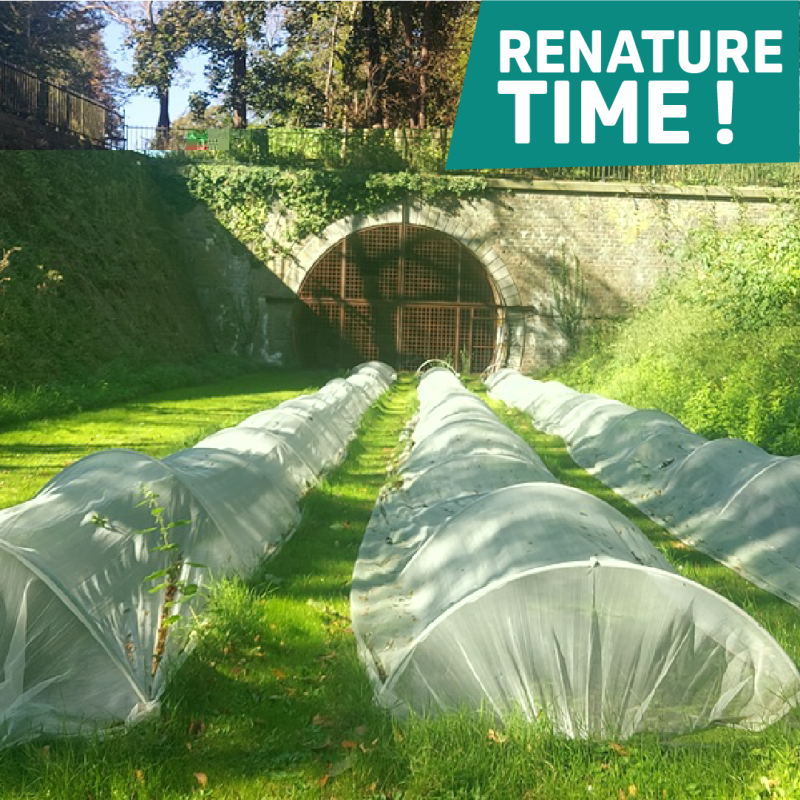
King Leopold II wanted to link the Royal Palace to the North Station by railway. Work had begun, but after his death it was abandoned, leaving behind a biotope deeply altered by landfill between the Japanese Tower and the Port of Brussels. The soil there was in fact too marshy. It is not known who first suggested that it might suit watercress cultivation, but the family of Netteke Cresson — a striking coincidence — understood its potential and devoted itself to this horticultural activity during the interwar period. The business declined, and it was not until 2013 that watercress was reintroduced here. Fed by very pure running water from the springs of the royal estate — an essential condition — the watercress bed was inaugurated by Queen Paola. Today, it is run by CRESSONDO, a project dedicated to safeguarding Brussels heritage and promoting a unique site in Europe: a century-old urban watercress bed. It also defends the fauna and flora of wetlands and raises awareness of urban market gardening through the vegetable garden. The aim is to make the watercress bed of Laeken a welcoming site in an environment that must become highly valuable ecologically in order to join the NATAGORA network.
In collaboration with Cressondo.
This activity is part of the Renature Time! programme and is organised in collaboration with Brussels Environment.
Practical information
Sunday from 13:00 to 18:00
Laeken watercress bed, avenue Van Praet 1, 1020 Brussels-Laeken
Advance booking required.

Not wheelchair accessible