Programme
Guided tour
250 Rouge-Cloître and its priory
Nature / Repurposed
Founded by hermits in 1369, who built cells and a chapel there, the Rouge-Cloître priory received the protection of the Dukes of Brabant, the Burgundian princes and their successors, who endowed it generously. The priory continued to prosper until its secularisation in 1784. The charm of the site kept attracting visitors: a guinguette opened in the Miller’s House in 1884, followed by a restaurant in 1902, before the State purchased the whole estate in 1910.
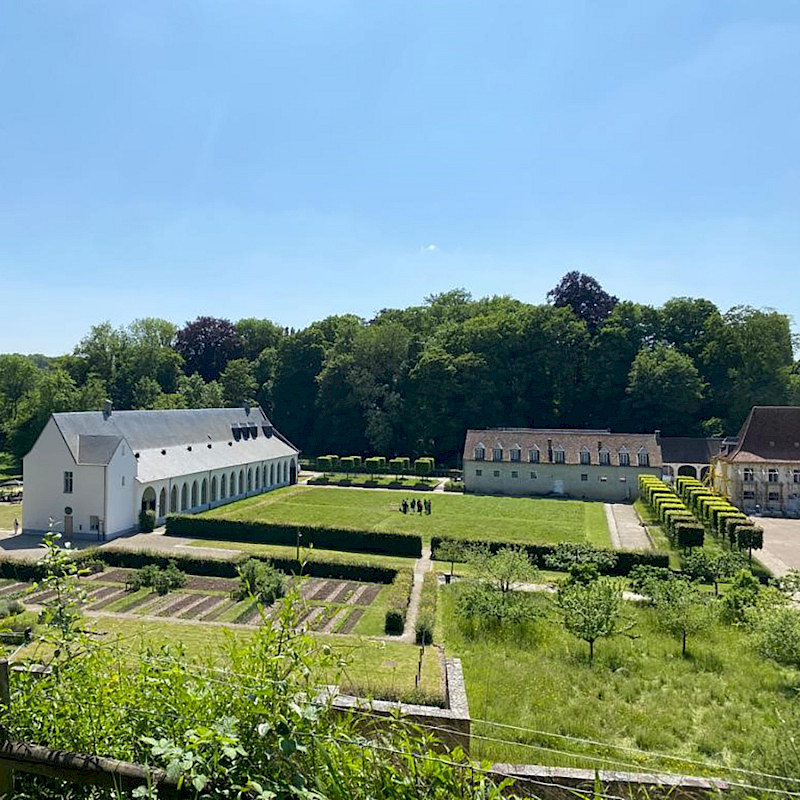
Today, where urbanised areas meet the Sonian Forest, Rouge-Cloître acts as a link between city and nature. This centuries-old abbey estate unfolds as a coherent ensemble of water and forest, paths and buildings, shaped by centuries of occupation. Since the 14th century, the Augustinian canons have moulded the landscape. Their traces remain visible in the walls, ponds and volumes that structure the site. The prior’s house, the oldest building on the site, has found a new purpose. After years of abandonment, it underwent a restoration that reconciles architecture, structural stability and nature management, with respect for the surrounding fauna. Rouge-Cloître thus remains a living place where walking, discovery and memory come together, and where past and future continue to shape the landscape. For this occasion, the Rubea Vallis non-profit organisation is exceptionally opening the priory, the oldest part of the monastery.
Booking is required for guided tours of the priory, organised in collaboration with Arkadia and Korei Guided Tours.
The Rouge-Cloître Art Centre, located on the same site, hosts an exhibition dedicated to nature and is accessible without booking on Saturday and Sunday from 13:00 to 17:00.
Practical information
Saturday from 13:00 to 17:00 and Sunday from 10:00 to 17:00
rue du Rouge-Cloître 4, 1160 Auderghem
In the gravel courtyard, near the fountain.
Advance booking required.

Not wheelchair accessible